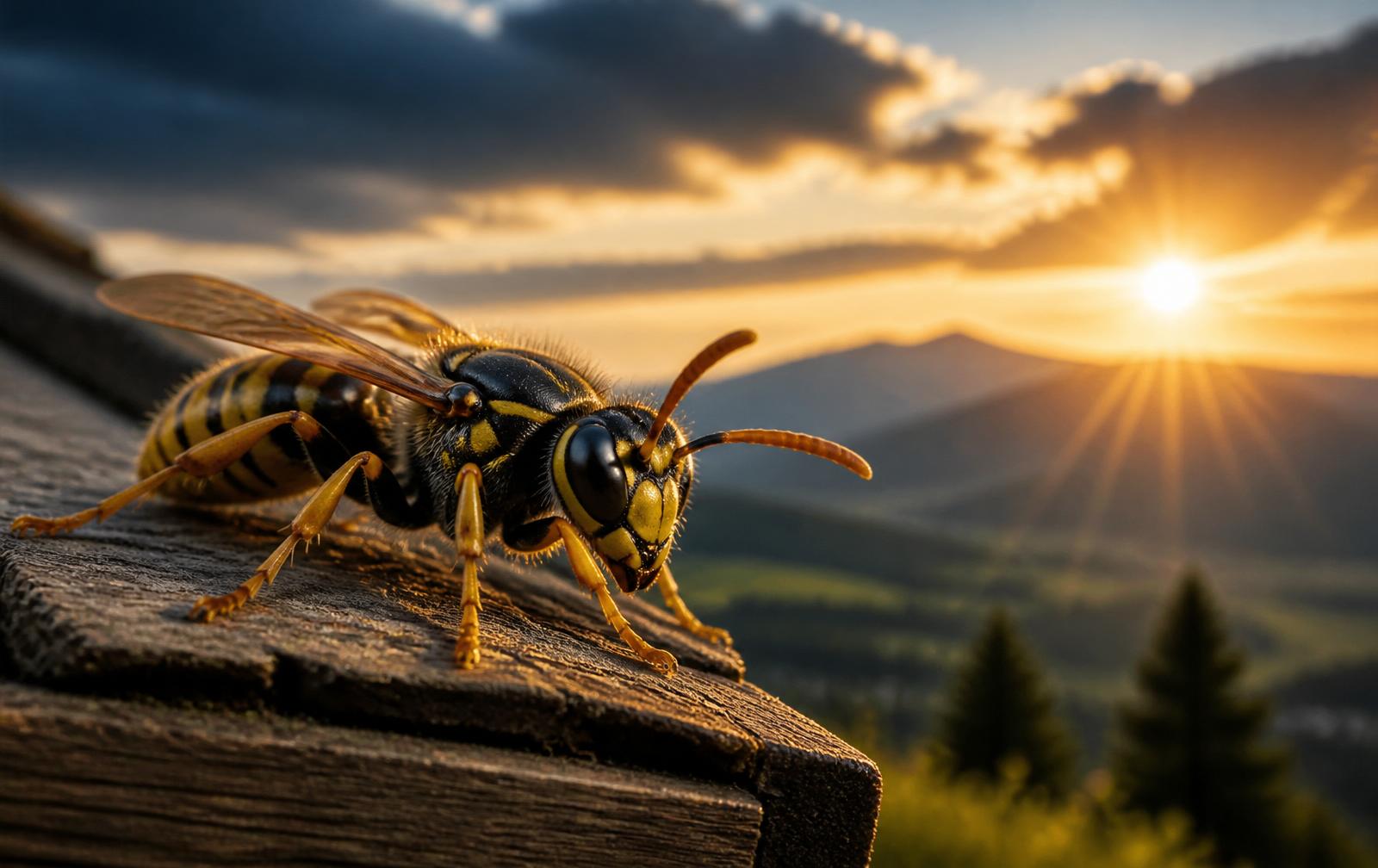
Western yellow jacket on a weathered eave with Colorado Rocky Mountain foothills in the background
Serving Colorado's Front Range

Colorado wasp, hornet & yellow jacket control.

From paper wasps under the eaves to yellow jackets in the lawn — OBEX technicians locate the nest, treat with the right tool (spray, dust, or direct removal), and install preventatives to keep the next colony from moving in. Free quotes, same-week service.

Licensed CO applicators Same-week service Pet & family conscious

Get a free wasp quote

Free

No obligation. Tell us where the nest is and we'll get right back to you.

By providing your phone number, you agree to receive text messages from OBEX Pest Defense. Message and data rates may apply. Message frequency varies. Reply STOP to opt out.

Sprays, dusting & direct nest removal
Preventatives that reduce return risk
Ground yellow jackets & hornet nests
Front Range: Denver to Fort Collins
Aug–Sep
Peak colony size on the Front Range
When yellow jackets get aggressive
Hundreds
Wasp species documented in Colorado
Only a handful are household pests
1,000s
Workers in a mature yellow jacket colony
From a single overwintered queen
Mid-Oct
First hard freeze along the Front Range
When the working colony dies off
What we treat

Three stinging insects. Three very different treatments.

Every wasp job in Colorado starts with correct ID — the wrong product on the wrong species scatters the colony instead of ending it.

Paper wasps (Polistes spp.)
Most common

Paper wasps

Polistes spp.
Where they nest
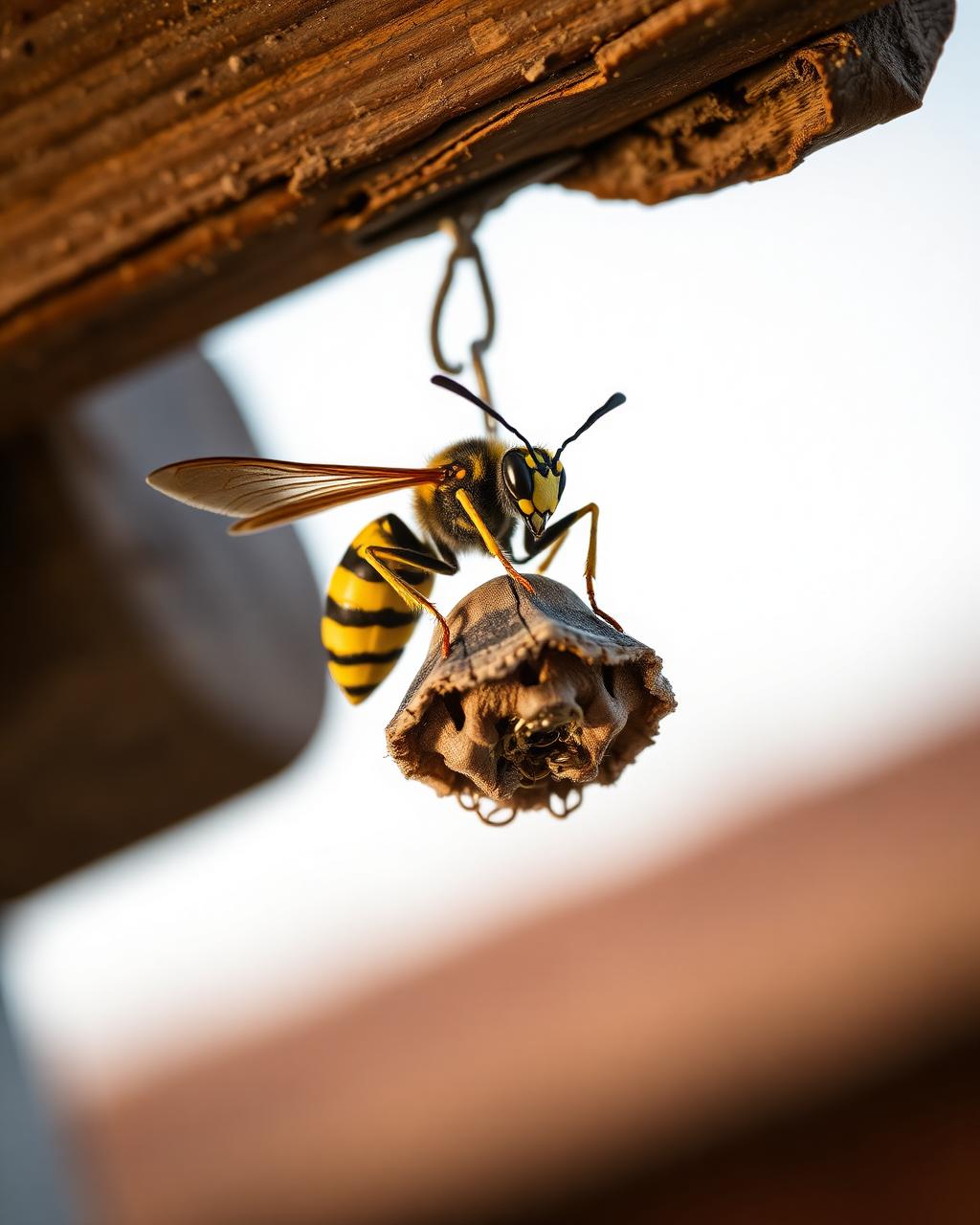
Open, umbrella-shaped nests hanging from eaves, soffits, porch ceilings, patio furniture, and playsets.
Behavior
The most common wasp Coloradans see on the house. Relatively docile away from the nest, but defensive within a few feet of it. Colonies stay small — usually 20–40 workers.
Why it matters
Repeat stings when a nest is near a doorway, mailbox, or grill. Colorado's dry stucco eaves are prime real estate.
Western yellow jackets (Vespula pensylvanica)
Most aggressive

Western yellow jackets

Vespula pensylvanica
Where they nest
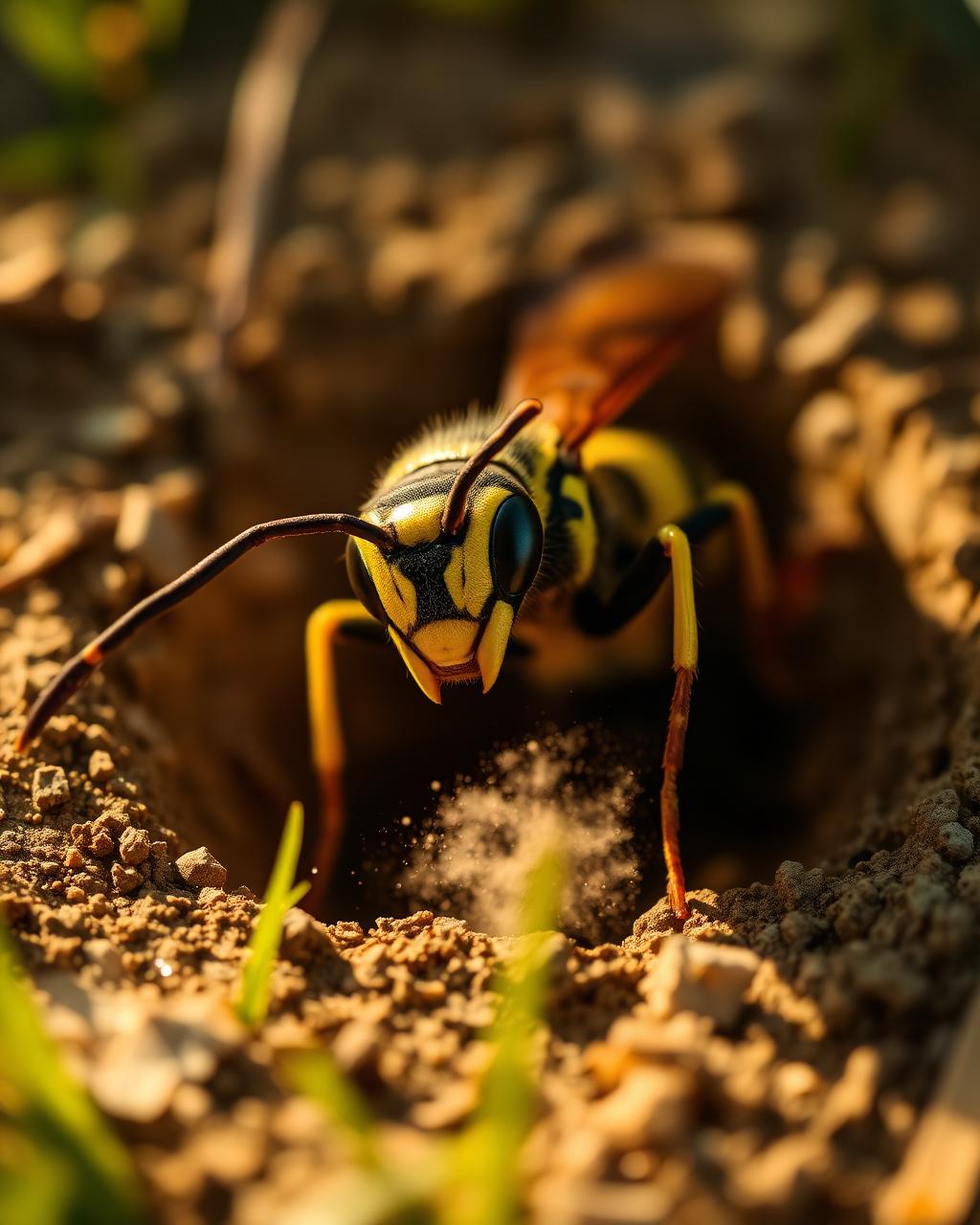
Underground burrows in lawns, along foundations, in meter boxes, and abandoned rodent holes.
Behavior
Aggressive, fast, and social. Colonies can reach thousands of workers by August. Late summer they shift from hunting insects to scavenging trash, pet food, and sugary drinks.
Why it matters
The species behind most stinging-insect ER visits in Colorado. Ground nests can be stepped on before they're seen — mowing or landscaping is a common trigger.
Bald-faced hornets (Dolichovespula maculata)
Largest nests

Bald-faced hornets

Dolichovespula maculata
Where they nest
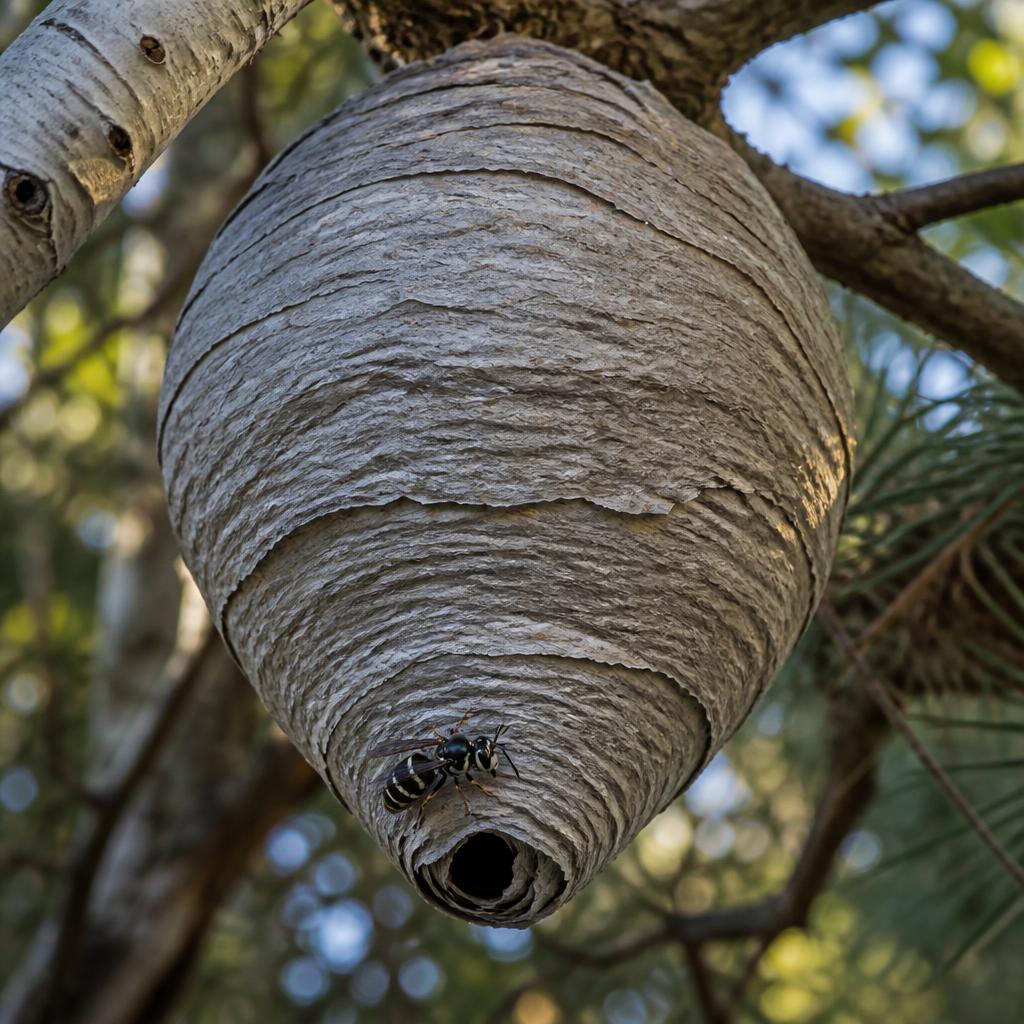
Large, gray, football-shaped paper nests in trees, eaves, sheds, and dense shrubs — sometimes 3+ feet tall.
Behavior
Technically a large black-and-white wasp, not a true hornet. Highly defensive of the nest and known to spray venom toward the eyes of perceived threats.
Why it matters
Nests high in Front Range cottonwoods, aspens, and blue spruces often aren't spotted until a landscaper or arborist gets close.
Honey bees? We don't treat them — they're pollinators, not pests. If you send us a photo and it's a honey bee swarm or hive, we'll point you to a local Colorado beekeeper who can safely relocate them.
Our treatment approach

The right tool for the nest — not a one-can-fits-all.

A ground yellow jacket colony doesn't respond to the same product as a paper wasp umbrella nest under the porch. We choose from four techniques based on species, nest location, and how much risk sits between the nest and your family.

Residual sprays

Applied to nesting surfaces — eaves, soffits, fascia, sheds — where wasps land and rest. Provides both immediate knockdown at the nest and residual activity that continues to work as wasps return.

Insecticidal dust

For ground nests and meter boxes. Foragers carry the dust back inside, taking out the colony from within. It's what makes ground yellow jacket work actually stick.

Direct nest removal

Where safe and appropriate, we physically remove the treated nest so it can't be re-occupied by a new queen next spring and isn't misread as a live threat by anyone in the family.

Preventatives

Exterior treatments around eaves, soffits, playsets, sheds, and trash areas discourage new queens from starting nests. We can't promise wasps never come back — new queens overwinter every year — but preventatives meaningfully lower the odds.

Ground yellow jackets & hornet nests: a note on how we handle them.

Yes — we treat ground-nesting yellow jackets and ground hornet colonies. They're just a different animal from a paper wasp under the eave: full protective gear, insecticidal dust worked into the entrance, and often a follow-up visit once foragers have carried the product back inside the colony. Because of the extra risk, gear, and time on-site, these jobs are handled a little differently than a standard wasp call. We'll walk through what your specific nest needs — and what it costs — on the phone before we roll a truck.

Colorado wasp season, month by month

Every year runs the same shape.

Overwintered queens emerge in April, colonies build through summer, and Front Range yellow jackets hit their peak in August and September before the first hard freeze ends the working colony.

Jan
Feb
Mar
Apr
May
Jun
Jul
Aug
Sep
Oct
Nov
Dec
DormantQueens emergeColony build-upPeak & most defensiveDecline / first freeze
Behavior & seasonality

Wasps in Colorado behave differently than the internet thinks.

Elevation, low humidity, and short but intense summers change how colonies grow and where they nest. Here's what actually matters along the Front Range.

Colorado wasp lifecycle

Only mated queens survive Colorado winters, tucked into wood piles, sheds, and attic corners. They emerge in April and May, start a small nest solo, and colonies balloon through June and July. August and September are peak — the biggest colonies, the most workers scavenging, the most calls we take.

The first-freeze cutoff

Wasps die off at the first hard freeze. Along the Front Range that's typically mid-to-late October in Denver and Longmont, earlier in Fort Collins, Greeley, and higher-elevation towns like Mead. After the freeze, the empty nest isn't a threat — but the mated queens who left it already are, hidden somewhere warm until spring.

Front Range hotspots

Colorado's dry stucco eaves are paper wasp heaven. Irrigated Front Range lawns give yellow jackets the moist soil they need for ground nests. Cottonwoods along the South Platte, Poudre, and Big Thompson rivers are classic bald-faced hornet trees. Sun-baked south and west eaves get hit hardest at altitude.

Why store-bought sprays often fail

Consumer wasp sprays have short range, no residual, and rely on you standing close enough to spray a defensive colony. Ground nests and protected outdoor spaces are almost impossible to treat from a can — you knock down the guards, agitate the colony, and 200 more come out the next opening.

When to call vs. wait

Not every wasp needs a truck. These do.

A single paper wasp scouting your porch in May is not a colony. But once any of the following are true, waiting only makes the job bigger, slower, and riskier.

  • A nest is within 10 feet of a door, walkway, playset, or grill
  • You see more than a few wasps per minute coming from one spot
  • A ground nest is in the lawn — mowing or watering is a sting risk
  • Anyone in the household is stung, allergic, or asthmatic
  • The nest is inside a soffit, chimney, or attic vent
  • You see a football-sized gray paper nest in a tree or shed
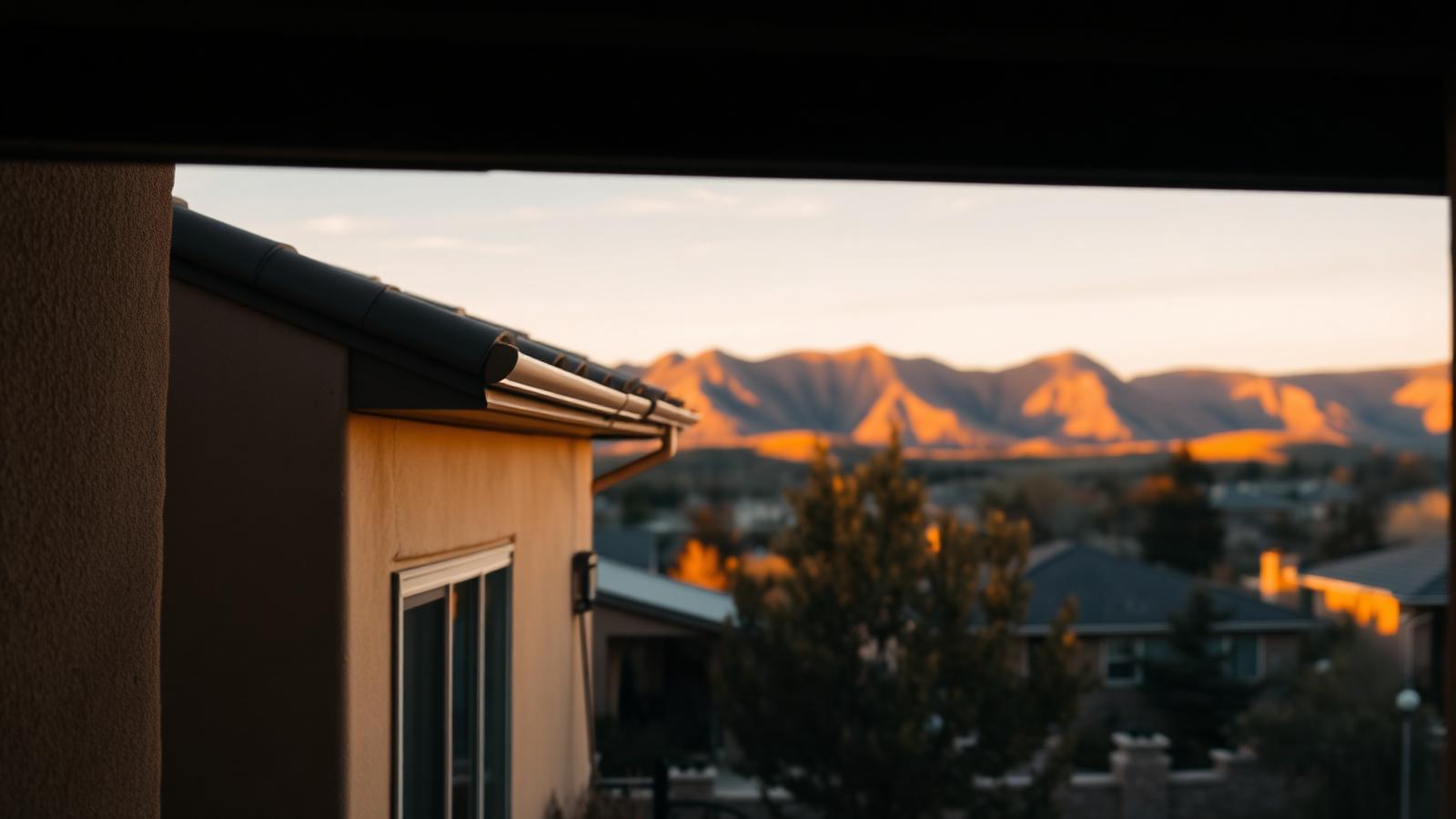
Colorado Front Range home eaves at golden hour with foothills in the background
Where wasps nest on Colorado properties

If it's sheltered, warm, and quiet — a queen has already scouted it.

Eaves & soffits
Attic & gable vents
Shed roofs
Playsets & swing frames
Gas meter boxes
Wood piles
Ground burrows in lawns
BBQ & patio furniture
Tree cavities & branches
Dryer & HVAC vents
Under deck boards
Mailboxes & light fixtures
Prevention we install

Reducing the odds — honestly, not with a guarantee.

Every spring is a fresh start for mated queens waking up in neighboring yards. What we can do is make your property a worse place to build a nest than the one next door — and catch the ones that try before they mature.

  • Exterior residual bands around eaves, soffits, and window frames — the spots queens scout in April and May.
  • Entry-point sealing of soffit gaps and vent screens once any active colony is confirmed dead.
  • Early-season queen knockdown visit — a spring service that targets founding queens before they build a colony.
  • Recurring seasonal plans that put a technician on your property before each peak so nests are caught small.
  • Trash, recycle, and hummingbird-feeder guidance for August–September, when yellow jackets shift to scavenging.
Colorado service area

From Denver Metro up through Northern Colorado.

Wasp, hornet, and yellow jacket control in every Front Range city below — and most of the smaller towns between them.

Learn more from OBEX

Deeper reading on Colorado wasps.

Field notes, ID guides, and treatment write-ups from the OBEX team — published on obexpest.com.

Frequently asked

Colorado wasp questions, answered straight.

Wasp removal pricing depends on the species, where the nest is located, and how accessible it is. Paper wasp nests under an eave are typically simpler than a ground yellow jacket nest or a ground hornet nest in the lawn. Call (720) 613-5560 and we'll walk through pricing once we know what we're dealing with — quotes are free.

Wasps don't wait. Neither do we.

One call gets a licensed Colorado technician on the way — from Denver Metro up to Fort Collins. Free quote, no pressure.

Serving the Front Range from Denver to Fort Collins
Call (720) 613-5560